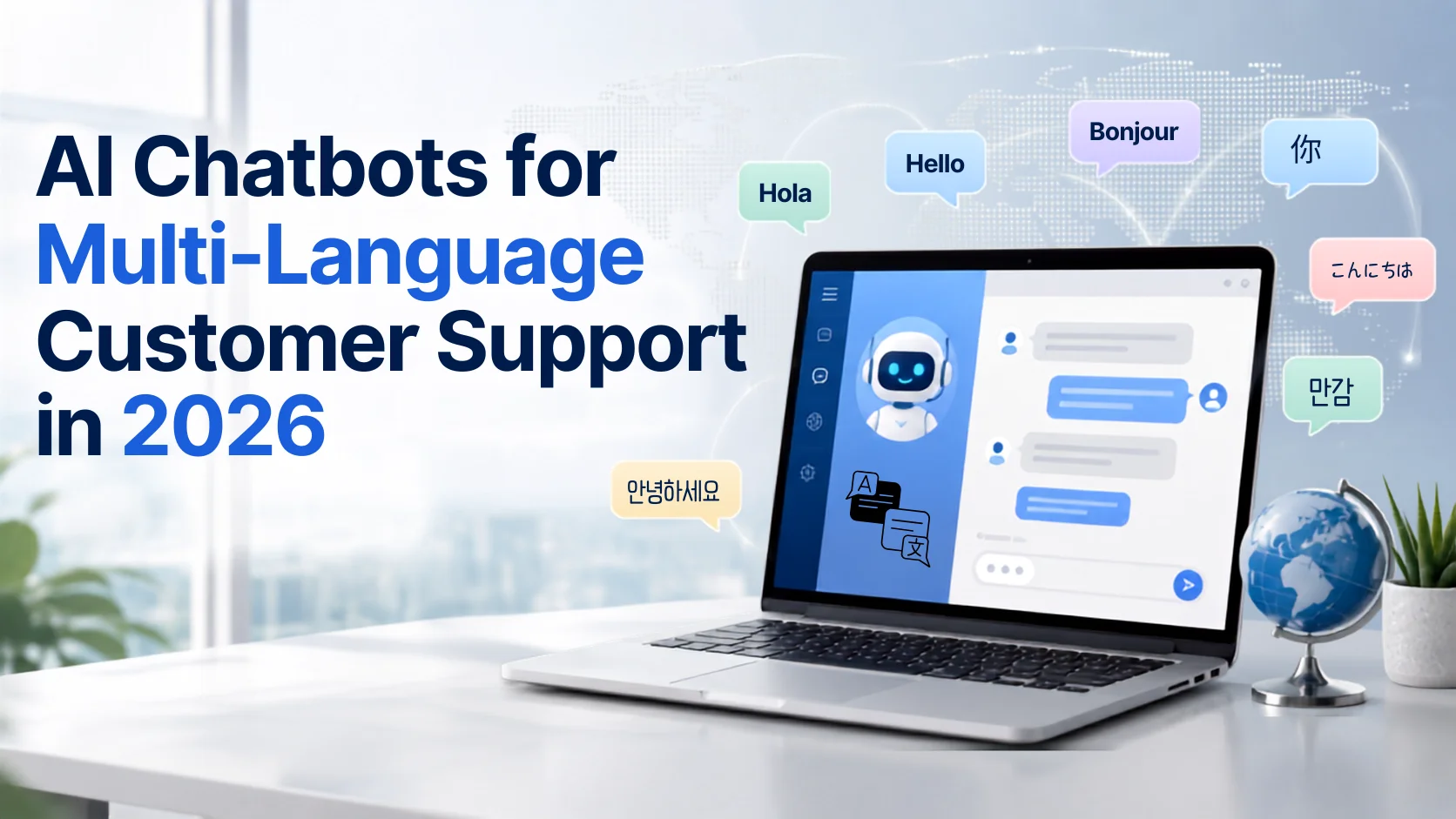
AI chatbots for multi-language customer support help reduce this barrier by understanding customer questions and responding in supported languages through the same conversational interface. For businesses serving international customers, this can make support more accessible without building a completely separate support process for every language.
What Is Multi-Language AI Customer Support?
Multi-language AI customer support uses artificial intelligence to communicate with customers in more than one language. A multilingual AI chatbot may detect the language a customer is using, understand the question, retrieve relevant business information and respond in that language.
Depending on the platform, it may use content already written in the customer's language or translate information from a primary knowledge base. For example, a business may maintain most of its support documentation in English while receiving a question in Spanish. A capable chatbot may identify Spanish, find the relevant business information and provide the response in Spanish.
Current AI support platforms increasingly combine automatic language detection with multilingual knowledge and real-time translation. Intercom, for example, documents a workflow in which its AI agent first looks for relevant content in the customer's language and can use translated fallback content when appropriate. This makes multilingual support much more practical than manually building a separate chatbot for every market.
How Does a Multilingual AI Chatbot Work?
The process usually starts when the customer sends a message. The chatbot identifies the language, interprets the meaning of the question and looks through the business knowledge available to it. This may include website pages, FAQs, policies, product information, support articles or uploaded documents.
If relevant content exists in the customer's language, the chatbot can use it directly. Some systems can also use a default-language knowledge source and translate the resulting answer. Language detection itself is not always perfect. Very short messages such as “price?” or “help” may not provide enough context to identify the language confidently.
Modern systems often use multiple messages or existing user information to improve detection. Intercom's current documentation, for example, notes that adequate message content is needed for confident automatic language identification. This is why businesses should test multilingual chatbots using real customer language rather than assuming every message will be detected correctly.
Why Multi-Language Support Matters for Businesses
A business website can attract customers from anywhere, even when the company itself operates from one country. An ecommerce store may receive shoppers from several regions. A SaaS company may have users across Europe, Asia and the Middle East. Travel, education, real estate and service businesses may also receive questions from people who prefer different languages.
Without multilingual support, customers may need to translate their own questions, wait for a specialist representative or communicate in a language they do not fully understand. A multilingual AI chatbot can provide a faster first level of assistance.
It can explain straightforward information while human representatives remain available for complicated or sensitive situations. The benefit is not simply “more languages.” It is reducing the effort customers need to make before they can communicate with the business.
Answering Common Questions Across Languages
Repeated questions are one of the strongest multilingual chatbot use cases. Customers may ask about delivery, prices, business hours, product availability, account setup, booking procedures, returns or service conditions.
If the answers already exist in approved business content, the chatbot can make that information more accessible. Imagine an ecommerce shopper asking in French whether a product can be returned after opening the package. Instead of requiring the shopper to locate and translate the English return policy, the chatbot can explain the relevant published condition in French.
The same model can work for SaaS onboarding instructions, travel policies, education admission information or service-business FAQs.However, the chatbot must still use the correct source information. Translation cannot compensate for an outdated or inaccurate knowledge base.
Helping Ecommerce Businesses Serve International Shoppers
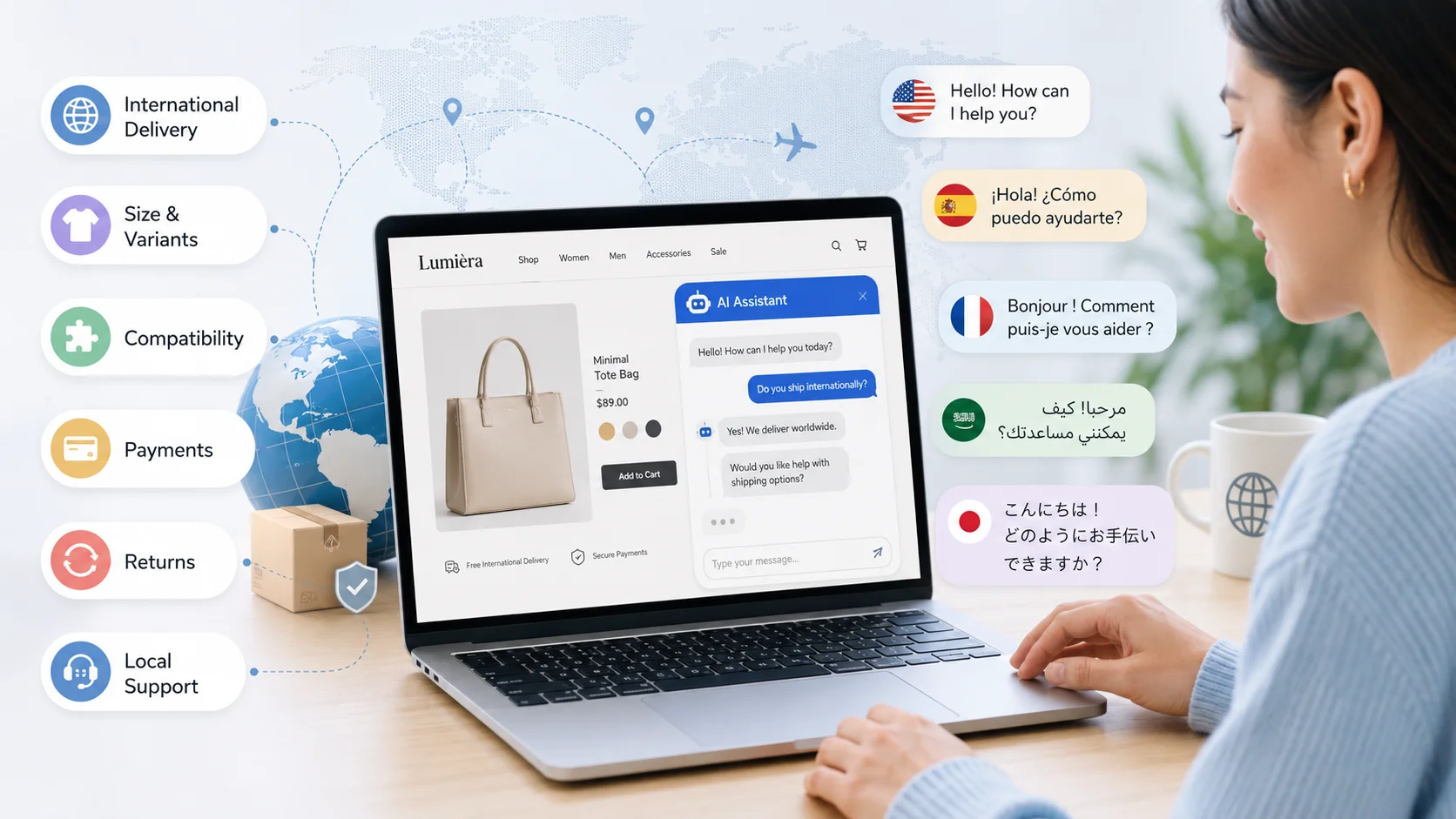
Ecommerce businesses can benefit significantly from multilingual customer support because questions often appear at the moment a shopper is deciding whether to purchase. A visitor may want to know:
Whether international delivery is available
Which size or variant to choose
Whether a product is compatible with another item
What payment methods are accepted
How returns work in their country
Whether duties or additional conditions apply
A multilingual chatbot can explain available product and policy information in a language the shopper understands more easily. For example: “¿Este cargador funciona con el modelo Pro?” If the store's product information confirms compatibility, the chatbot can answer in Spanish using that information.
This can reduce friction, but businesses should be particularly careful with prices, taxes, shipping terms, warranties and return conditions. These may vary by country and the chatbot should not assume that one market's policy applies everywhere. Live order information, stock levels or country-specific pricing also require the correct integrations. Translation alone does not provide access to those systems.
Supporting Human Agents Across Language Barriers
Multilingual AI can also help when a conversation needs to move from automation to a person. A customer may write in one language while the available support representative works primarily in another. AI translation can help the representative understand the customer's message and send a translated reply.
Current customer-service platforms are increasingly building this into the support workspace. Intercom's 2026 inbox translation system, for example, can translate customer conversations into a teammate's preferred working language and translate replies back into the customer's language.
This can expand the number of conversations a team can manage without requiring every employee to speak every supported language. However, translation should assist the representative rather than remove human judgment. Complex disputes, sensitive messages, contractual terms and emotionally charged conversations may require a fluent speaker or specialist review.
Multilingual Knowledge Is Better Than Translation Alone
Real-time translation is useful, but businesses should not rely on it for everything. If a market is important to your business, maintaining high-quality support content in that language is usually better than translating every answer dynamically.
A translated knowledge base can preserve preferred terminology, product names, legal wording, brand voice and market-specific instructions more accurately. For example, an English support article may describe a “return authorization,” while customers in another market may normally use a different local term.
A carefully localized version will usually communicate the process more naturally than literal translation. A practical strategy is to translate the highest-value content first, such as:
Frequently asked questions
Product information
Shipping and returns
Account setup instructions
Billing information
Troubleshooting guides
Real-time translation can then provide wider coverage for less common questions. This mixed approach is already reflected in current AI-support systems that prioritize native-language content before using translated fallback material.
Language Is Not the Same as Localization
Supporting a language does not automatically mean the customer experience is fully localized. Two customers may speak English but expect different currencies, date formats, measurements, shipping rules or terminology.
Spanish-speaking customers in Spain and Latin America may also use different expressions. A multilingual chatbot therefore needs to understand more than words when the business operates across different markets. Localization may involve:
Currency and pricing context
Local date and time formats
Regional policies
Measurements and sizing
Local product availability
Market-specific terminology
The chatbot should use the information supplied by the business instead of assuming that every customer speaking the same language follows the same rules.
Where Multilingual Chatbots Can Go Wrong
AI translation and language models are improving, but they can still misunderstand meaning. Short messages, slang, spelling mistakes, mixed-language conversations, technical terminology and regional expressions can create problems.
A customer may even switch languages halfway through a conversation. Another risk is translating business terminology too literally. Product names, contractual wording, technical instructions and brand-specific phrases may require specific translations. Businesses should therefore be especially careful with:
Legal and contractual information: Translation errors can change the meaning of important terms.
Payment and refund information: Customers need precise explanations when money is involved.
Technical or safety instructions: Incorrect wording may create a genuine risk.
Sensitive complaints: Emotional meaning can be lost or changed during automated translation.
When the chatbot is uncertain, it should offer human assistance rather than continue with an unreliable interpretation.
Human Handoff Still Matters
A multilingual chatbot should not become a reason to remove human support. Routine questions about products, policies, services and basic procedures are suitable for automation.
Complex negotiations, complaints, unusual refunds, technical emergencies, account-security issues or sensitive customer situations usually need a person. A strong handoff should preserve the original message, translated version, conversation history and information already collected.
If possible, route the customer to a representative who understands the language. When that is not possible, AI translation can help both sides communicate, but the representative should remain responsible for important decisions. The customer should also be able to request a person directly.
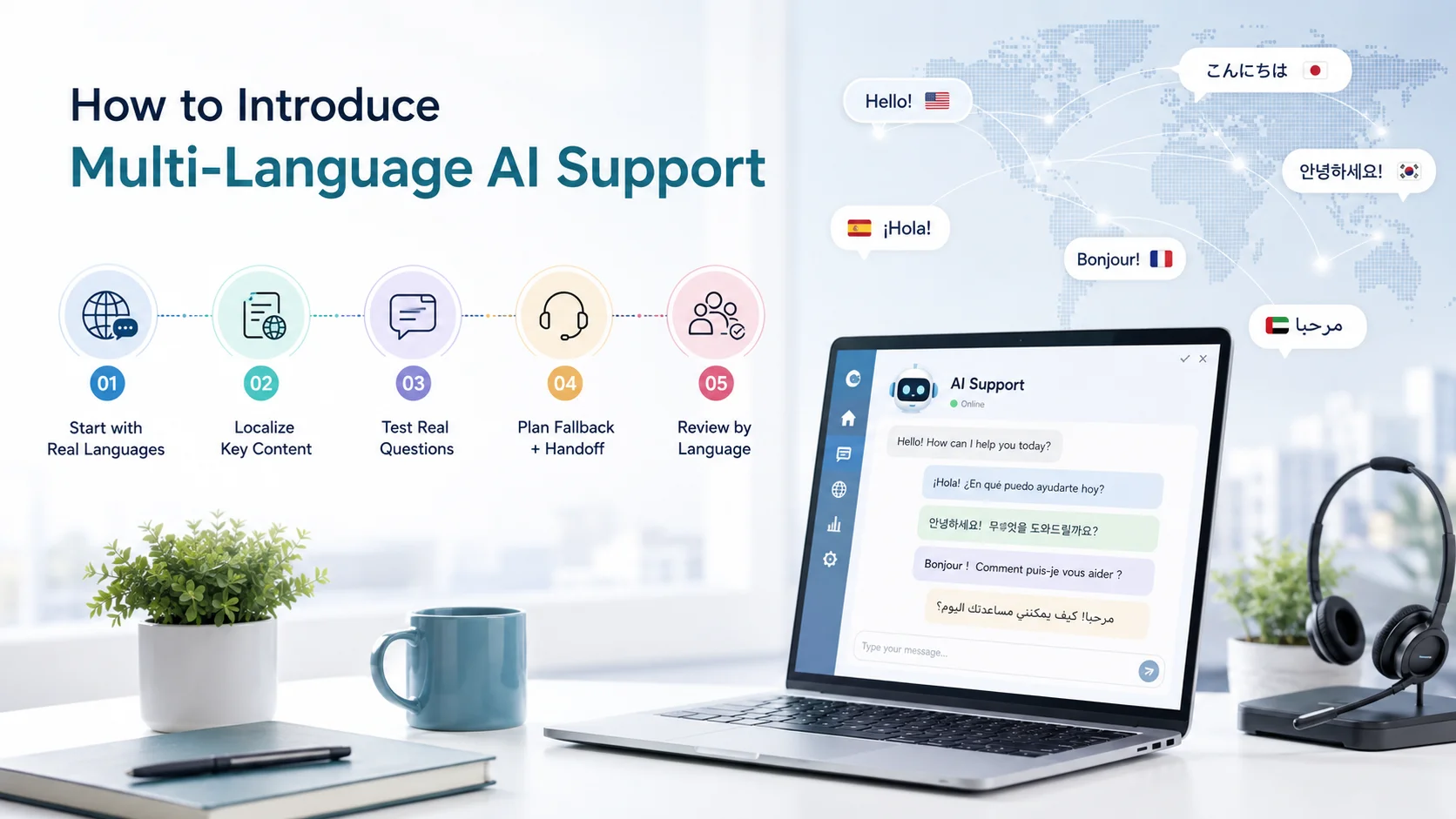
How to Introduce Multi-Language AI Support
Start with the languages your customers actually use rather than trying to support every possible language immediately. Review website analytics, customer emails, support tickets, locations and sales data to understand where demand already exists.
Next, prepare reliable knowledge in your primary language and identify the most important content that should be professionally localized. Configure the chatbot to use these approved sources and define how fallback translation should work.
Test each supported language with real questions. Include informal wording, product names, spelling mistakes, short messages and follow-up questions. You should also test what happens when:
The customer changes language
The chatbot cannot detect the language
No translated knowledge exists
A customer asks about a market-specific policy
Human escalation is required
After launch, review performance by language rather than looking only at overall chatbot results. Modern AI-support platforms increasingly provide language-level reporting specifically for this reason.
How to Measure Multilingual Support Performance
A chatbot may perform very well in one language and poorly in another, so overall conversation numbers can hide important problems. Monitor successful answers, unresolved questions, human handoffs, customer feedback, translation problems and common topics separately for important languages.
Pay particular attention to situations where customers repeat or rephrase questions. This may indicate that the chatbot understood the language but not the intended meaning. Businesses should also review whether customers are receiving the correct local policy or simply a translated version of information intended for another market. The goal is not to claim support for the largest possible number of languages. The goal is to provide dependable assistance in the languages you choose to support.
How Agent Best AI Supports Multi-Language Customer Conversations
Agent Best AI is designed to support visitors from different regions through multi-language AI conversations alongside its wider customer-support capabilities. Its platform also uses business-specific website content and additional uploaded knowledge to help the AI agent provide relevant responses.
For example, an ecommerce business can provide product information, FAQs, shipping policies and return details, while a SaaS company can provide feature documentation, onboarding information and support guides.
The AI agent can then assist website visitors with questions while more complex conversations can be transferred to the business team. As with any multilingual system, businesses should test important languages carefully and keep the underlying knowledge current.
Final Thoughts
AI chatbots for multi-language customer support can make a business more accessible to customers who would otherwise struggle to communicate comfortably. They can answer common questions, make support content easier to access, assist international ecommerce shoppers and help human teams communicate across language barriers.
But effective multilingual support requires more than automatic translation. Businesses still need reliable knowledge, market-specific information, careful testing and clear human-handoff rules.
In 2026, the most useful multilingual chatbot is not the one that simply claims to understand the most languages. It is the one that gives customers accurate, understandable and contextually appropriate help in the languages that matter to the business.