What Is an AI Sales Agent for a Website?
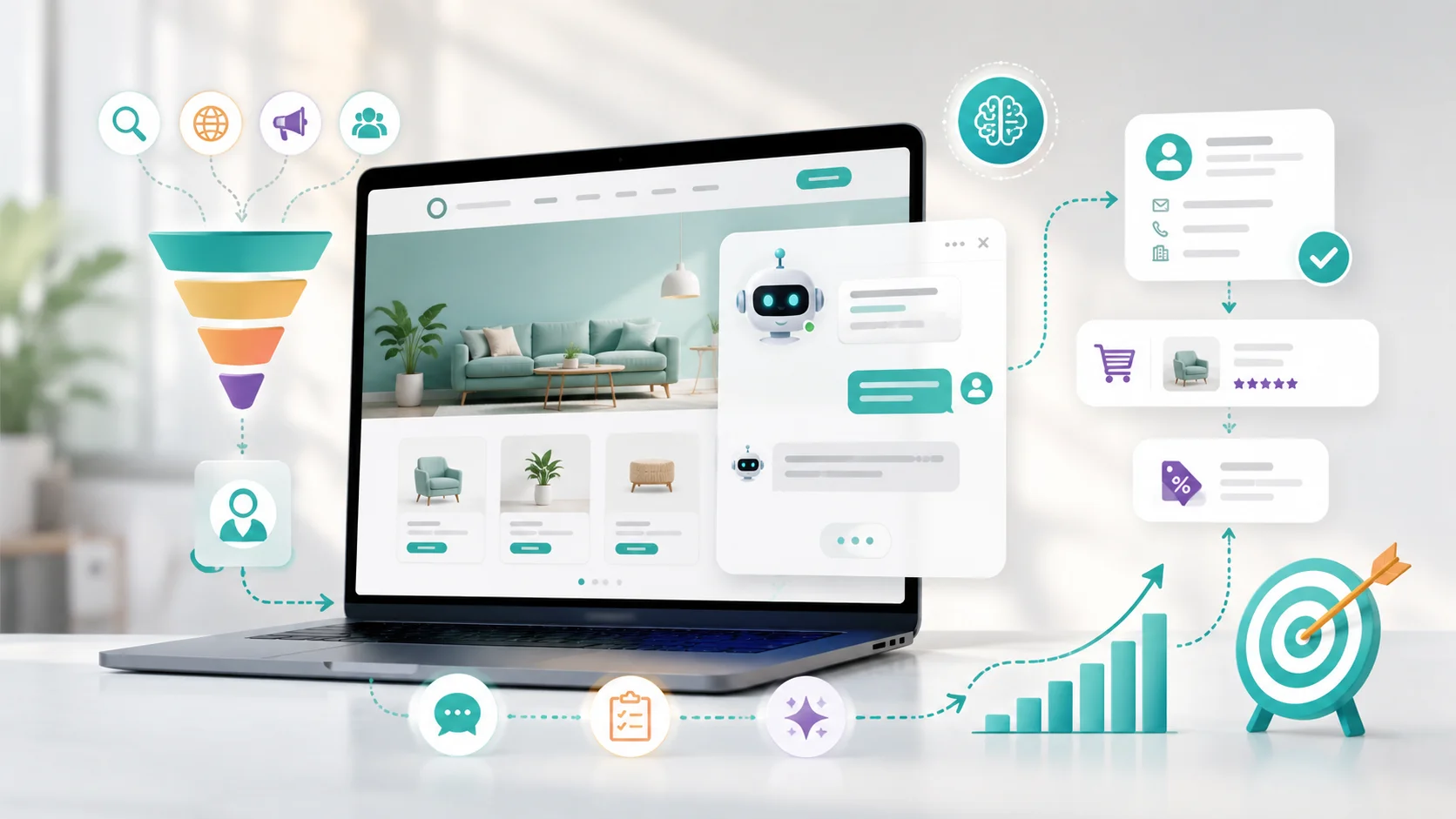
An AI sales agent is a conversational assistant that supports website visitors during the buying process.
It can use information from product pages, service descriptions, pricing details, FAQs, policies and uploaded documents to answer sales-related questions in natural language.
For example, a visitor may ask:
“Which plan is suitable for a small business?”
“Does this product work with my existing system?”
“Can I book a demonstration?”
“What is included in this service?”
Unlike a basic scripted chatbot, an AI sales agent can understand different ways of asking the same question and continue the conversation based on earlier messages.
Depending on its integrations, it may also collect lead information, suggest products, direct visitors to relevant pages or connect them with a salesperson.
Why Interested Visitors Leave Without Converting
Some visitors leave because they are only researching or are not ready to buy. An AI sales agent cannot convert everyone.
However, many interested visitors leave because of avoidable friction. They may not understand the difference between two plans, feel uncertain about product compatibility or want an answer outside business hours.
A traditional contact form asks the visitor to submit information and wait. An AI sales agent creates an immediate two-way conversation while the visitor’s interest is still active.
This can be especially useful on pricing, service, product, demo and consultation pages where one unanswered question may prevent the next step.
How an AI Sales Agent Converts Website Visitors
It Answers Questions at the Right Moment
Timing is important in sales.
When someone is viewing a product or pricing page, they may be close to making a decision. If they cannot find an answer, they may leave and continue researching elsewhere.
An AI sales agent can immediately explain features, prices, service requirements, delivery information, policies or the next step in the buying process.
For example, a visitor might ask:
“Does this plan support more than one website?”
The agent can answer from approved pricing information and direct the visitor to the relevant plan or human sales team.
It should never invent pricing, discounts, stock levels, features or guarantees. When information is unavailable, it should clearly say so and offer human assistance.
It Helps Visitors Choose the Right Option
Customers do not always know which product or service best matches their needs.
An AI sales assistant can ask a few relevant questions and guide the visitor toward suitable information. A SaaS company may ask about team size and required features. A service business may ask about project goals and timelines. A real estate company may ask about location, budget and property preferences.
The agent should not make unsupported decisions for the customer. Its role is to explain differences, narrow the options and help the visitor make an informed choice.
It Qualifies Leads Naturally
Long contact forms can discourage visitors. An AI sales agent can collect useful information through a conversation instead.
Depending on the business, it may ask about:
The visitor’s main requirement
Business or industry type
Preferred product or service
Budget range
Expected timeline
Contact information
The collected details can then be passed to the sales team, helping them understand the opportunity before following up.
Lead qualification should remain helpful rather than intrusive. The chatbot should only request information that the business genuinely needs.
It Guides Visitors Toward a Clear Next Step
A good sales conversation should have direction.
After answering a question, the agent can suggest a relevant next action, such as viewing a service page, comparing plans, starting a free trial, requesting a quote, booking a demo or speaking with a sales representative.
The action should match the visitor’s intent. Someone doing early research may need an educational page, while a visitor asking about pricing and implementation may be ready for a consultation.
Using the same aggressive call to action in every conversation can reduce trust. The next step should feel useful, not forced.
It Captures Opportunities Outside Working Hours
Potential customers do not visit only when the sales team is online.
An AI sales agent can answer approved questions during evenings, weekends and across different time zones. It can also collect contact details and requirements for later follow-up.
Even when it cannot complete the entire sales process, it prevents valuable opportunities from disappearing simply because no team member was available.
It Transfers Serious Buyers to Your Team
AI should not stand between a high-value buyer and a salesperson.
Visitors requesting custom pricing, technical consultation, enterprise agreements, unusual integrations or detailed negotiations usually need human assistance.
A good handoff should include the previous conversation, the visitor’s contact details, their requirements and the reason for escalation. This allows the sales representative to continue without asking the customer to repeat everything.
The strongest approach combines AI efficiency with human experience. AI manages initial questions and qualification, while people handle relationships, negotiations and complex decisions.
How AI Sales Agents Help Ecommerce Websites
Ecommerce shoppers often need help before completing a purchase.
They may want to compare two products, understand sizing, confirm compatibility, check delivery times or review return conditions. An AI sales agent can answer these questions using the store’s own product and policy information.
For example, a shopper may ask:
“I need a lightweight laptop for university and occasional video editing.”
The agent can identify products whose published specifications match those needs and explain the differences. It should only make recommendations supported by accurate product information.
An ecommerce AI sales agent may help with product discovery, feature comparisons, store navigation, pre-purchase questions, delivery information and return policies.
Its capabilities still depend on integrations. A chatbot may explain how customers can track an order without being able to access the order itself. Businesses should be clear about the difference between providing information and completing an action.
What an AI Sales Agent Should Not Do
An AI sales agent should support responsible selling, not automate every decision.
It should not invent prices, discounts, features, stock information or delivery promises. It should not hide that the visitor is interacting with AI, request unnecessary personal information or continue answering when reliable knowledge is unavailable.
Sensitive complaints, payment disputes, complex negotiations and unusual requests should usually be transferred to a person.
Clear limits make the agent more trustworthy because visitors can receive honest answers and human help when needed.
How to Set Up an AI Sales Agent
For setup, start with one clear objective. Decide whether the agent should capture leads, generate demo requests, guide product purchases, explain services or connect visitors with the sales team.
Next, prepare accurate business information. Include product descriptions, service pages, pricing details, policies, FAQs, case studies and sales documents. Remove outdated or conflicting content before training the agent.
Review real questions from sales emails, chat logs, support conversations and contact forms. These questions reveal what visitors actually need before making a decision.
Define the agent’s boundaries and handoff rules. It should know what it may answer, what information it can collect and when a person must take over.
Finally, test realistic conversations. Use short messages, spelling mistakes, follow-up questions, comparisons, objections and questions the chatbot should refuse or escalate.
After launch, continue reviewing conversations and updating its knowledge.
Where Should You Place It?
An AI sales agent can appear across the website, but the conversation should match the page being viewed.
They have different features and explanations for each page. For example, on the homepage, it may explain what the business offers. On a service page, it can answer questions about requirements. On a pricing page, it may explain plan differences. On an ecommerce product page, it can help with specifications, compatibility, delivery, and policies.
High-intent locations include:
Product and service pages
Pricing pages
Demo or consultation pages
Comparison pages
Contact pages
Checkout-support areas
Avoid aggressive pop-ups that interrupt visitors immediately. The agent should be easy to find when help is needed without becoming a distraction.
How to Measure Performance
Success should not be measured only by the number of conversations.
A useful AI sales agent should improve the quality of website interactions and help visitors move toward meaningful actions.
Important measures may include qualified leads captured, demos requested, product pages visited after a conversation, assisted purchases, successful answers, human handoffs, unresolved questions and lead-to-customer conversion.
Lead quality matters as much as lead quantity. A smaller number of well-qualified enquiries may be more valuable than hundreds of weak submissions.
How AgentBest.ai Supports Website Sales
AgentBest.ai helps businesses create an AI agent using their website content and additional business knowledge. The platform can learn from products, services, FAQs, policies, pricing information and other important pages. Businesses can also upload PDFs, manuals, support documents and brand guidelines to improve the agent’s knowledge.
After deployment through a website widget, the AI agent can answer visitor questions, guide users, collect enquiries, support sales conversations and transfer complex requests to the business team.
For an ecommerce store, this may mean helping shoppers understand products and policies. For a SaaS company, it may involve explaining features and plans. For a service business, it can collect project requirements before a consultation. This allows businesses to support website sales conversations without developing an AI system from the beginning.
Final Thoughts
An AI sales agent for a website does not convert visitors through pressure. It converts by making the buying journey clearer and easier.
It answers questions while interest is active, helps visitors understand their options, collects useful lead details and connects serious buyers with the right person.
AI cannot fix an unclear offer or guarantee that every visitor will become a customer. Its performance still depends on the quality of the website, business knowledge, traffic and setup.
But when used carefully, an AI sales agent can reduce communication gaps that cause interested visitors to leave. It gives customers faster assistance and gives sales teams better-prepared conversations to continue.