What Is an AI Powered Chatbot Platform?
An AI powered chatbot platform is software that helps businesses create, train, deploy and manage an intelligent chatbot.
Unlike a basic chatbot that depends mainly on fixed buttons or scripted responses, an AI chatbot can understand different ways of asking the same question. It can use website pages, FAQs, policies, product information and uploaded documents to provide business-specific answers.
For example, a visitor may ask: “Does your service work with Shopify?”
The chatbot can search the company’s approved knowledge and respond based on its service pages, FAQs or support documents.
The platform is more than the chat window visible on the website. It normally includes tools for managing knowledge, reviewing conversations, updating chatbot instructions, connecting business tools, tracking performance and transferring customers to a human team member.
How Does an AI Chatbot Platform Work?
Most AI chatbot platforms follow a similar process. First, the business provides information that the chatbot is allowed to use. This may include website pages, product details, services, FAQs, policies, manuals, pricing documents and uploaded files.
The platform then processes and organizes this content so it can find relevant information when a visitor asks a question.
When someone sends a message, the AI tries to understand the meaning and intent behind it. It searches the available business knowledge and creates a clear response based on the most relevant information. For example, if a visitor asks about refunds, the chatbot should use the company’s actual refund policy instead of providing a general answer.
When the chatbot cannot answer confidently, it should explain that more help is required and provide a way to contact a human agent.
How Is It Different From a Traditional Chatbot?
Traditional chatbots usually follow predefined conversation paths. They may ask visitors to choose from options such as pricing, order tracking, support or contact sales. These chatbots can be useful for simple tasks, but they often struggle when a customer asks a question in an unexpected way.
An AI powered chatbot platform is more flexible. It can recognize that questions such as “How much does it cost?”, “Can you explain your plans?” and “Which package is suitable for a small company?” are all related to pricing.
It can also understand follow-up questions. If a visitor asks about a particular service and then says, “How long does it take?”, the chatbot can use the earlier conversation to understand what the visitor means. This ability creates a more natural experience than navigating through a fixed menu.
Main Features of an AI Powered Chatbot Platform
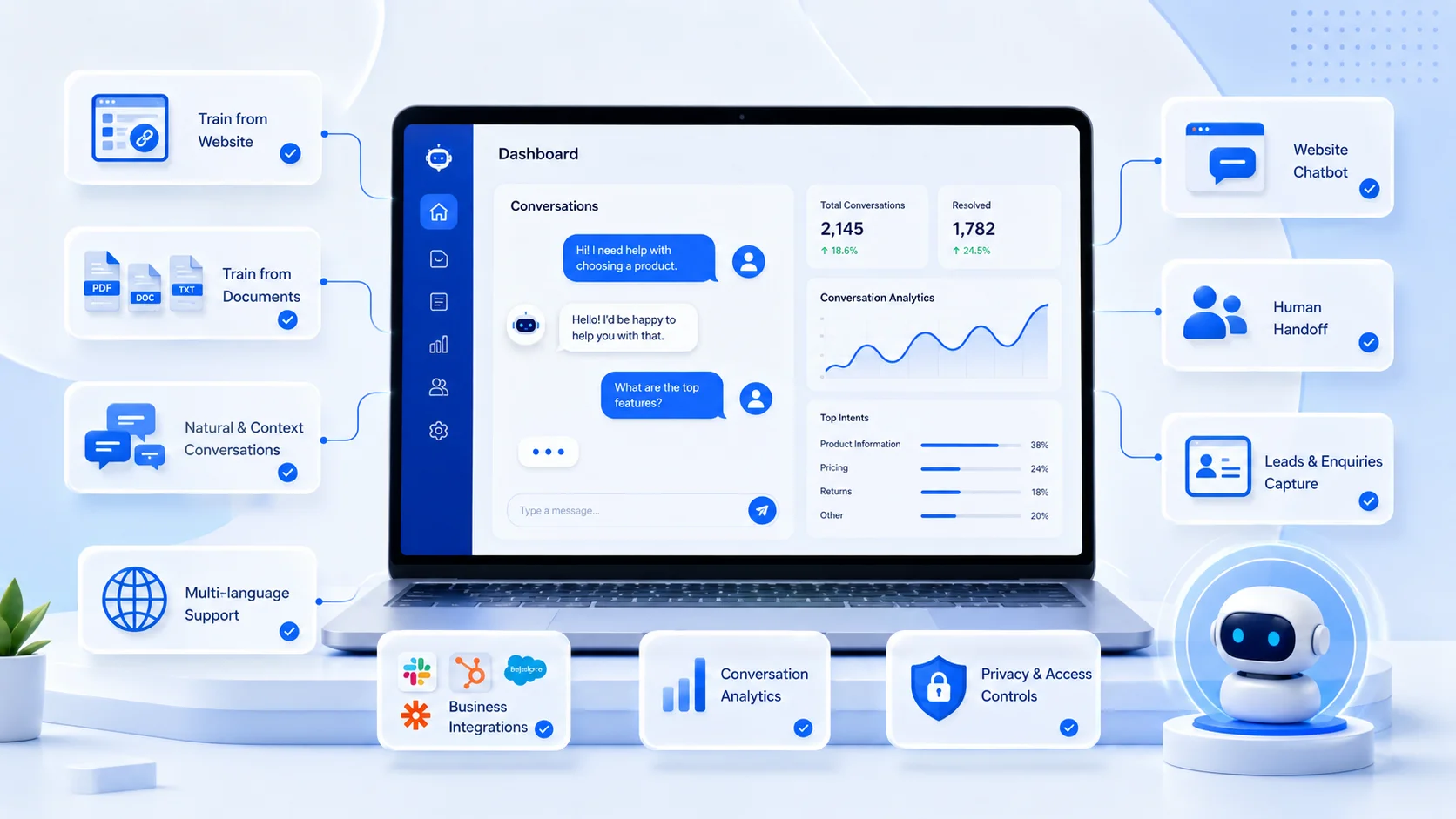
A useful platform should provide more than automated answers. Important features usually include:
Training from website content and documents
Natural and context-aware conversations
Website chatbot deployment
Human handoff
Lead and enquiry capture
Multi-language support
Business integrations
Conversation analytics
Privacy and access controls
The quality of these features varies between platforms. Businesses should test how accurately a chatbot answers real questions rather than choosing a tool based only on its marketing claims.
How Businesses Use AI Chatbot Platforms
Businesses use AI chatbots for several customer-facing tasks. A chatbot can answer repeated questions about services, products, policies, pricing, delivery, availability or business processes. This gives visitors immediate support while reducing repetitive work for employees.
It can also help users navigate a website. When someone cannot find the right product, service page, policy or contact option, the chatbot can guide them toward relevant information. For sales conversations, an AI chatbot may explain services, answer pre-purchase questions, collect enquiry details and help visitors understand which option may match their needs.
Businesses also use chatbots outside normal working hours. The AI can respond to suitable questions when the team is unavailable and collect information for conversations that require human follow-up.
These platforms can support ecommerce stores, SaaS companies, service businesses, real estate websites, educational platforms, travel companies, customer-support teams and many other industries.
Benefits of an AI Powered Chatbot Platform
The main benefit is faster access to information. Visitors do not need to search the entire website or wait several hours for an email response.
An AI chatbot can also reduce repetitive support work by answering common questions consistently. This allows employees to focus on conversations that require experience, judgment or personal attention. Because the chatbot can assist multiple visitors at the same time, it can help businesses manage increased website activity without creating a long support queue.
Conversation data can also provide useful insights. If visitors repeatedly ask the same question, the business may need to improve a product page, policy, FAQ or service description. However, these benefits depend on accurate knowledge, proper setup and regular monitoring. Installing a chatbot does not automatically create a better customer experience.
Limitations Businesses Should Understand
An AI chatbot is not a complete replacement for human support. It may give an incorrect answer if its information is outdated, incomplete, or unclear. Product details, prices, policies and services must therefore be updated whenever the business changes.
AI may also struggle with emotional, sensitive, or unusual situations. Complaints, payment disputes, complex technical problems and important business enquiries may require a human response. Privacy is another important consideration. Businesses should understand what information the chatbot collects, where conversations are stored, who can access them and how long the data is retained.
A reliable platform should allow the business to control the chatbot’s knowledge, define clear limits and transfer conversations when the AI cannot provide appropriate help.
What to Check Before Choosing a Platform
Before selecting an AI chatbot platform, a business should check whether it can learn from existing website content and additional documents.
The chatbot should provide answers from approved business information, understand follow-up questions and allow knowledge to be updated easily.
Human handoff is equally important. Customers should have a clear way to reach a person when the chatbot cannot resolve their request.
Businesses should also evaluate integrations, supported languages, analytics, data controls, expected conversation limits and overall ease of deployment.
The best test is to use real customer questions. Try incomplete sentences, spelling mistakes, different wording and questions that the chatbot should not answer. This gives a more realistic picture of how it will perform after launch.
How AgentBest.ai Works
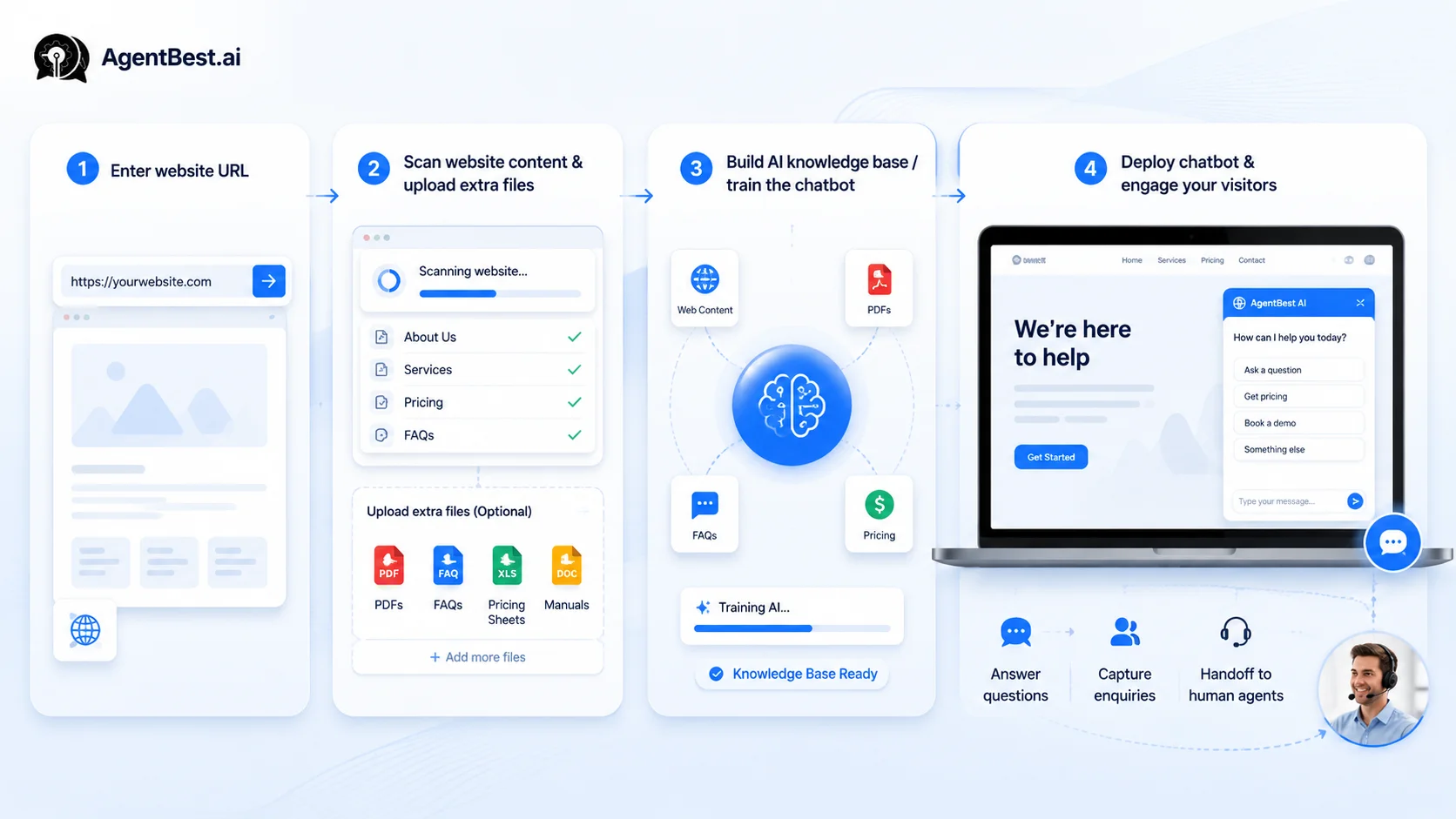
AgentBest.ai helps businesses create an AI agent using their website content and additional business knowledge.
A user enters a website URL, and the platform scans relevant pages, services, products, FAQs, policies and other available information. The business can also upload PDFs, manuals, support documents, pricing details, or additional FAQs to improve the chatbot’s knowledge.
After setup, the AI agent can be deployed on the website through a chatbot widget. It can answer visitor questions, guide users, support customer-service and sales conversations, collect enquiries and transfer complex requests to a human team member.
This allows a business to create and launch an AI chatbot without developing the entire system from the beginning.
The Future of AI Chatbot Platforms
In 2026, AI chatbot platforms are moving beyond simple question-and-answer conversations.
More advanced systems can maintain better context, connect with business tools, support human agents and assist with approved actions through integrations. However, the main purpose remains simple: help people find accurate information with less effort.
The most effective AI powered chatbot platform does not try to automate every conversation. It answers suitable questions quickly, uses reliable business knowledge, recognizes its limitations and makes human assistance available when needed.
When implemented carefully, an AI chatbot can become a practical part of customer support, website engagement, lead generation and business growth.